EstensioneExtent
2,39
km² · piana carsicakm² · karst plain
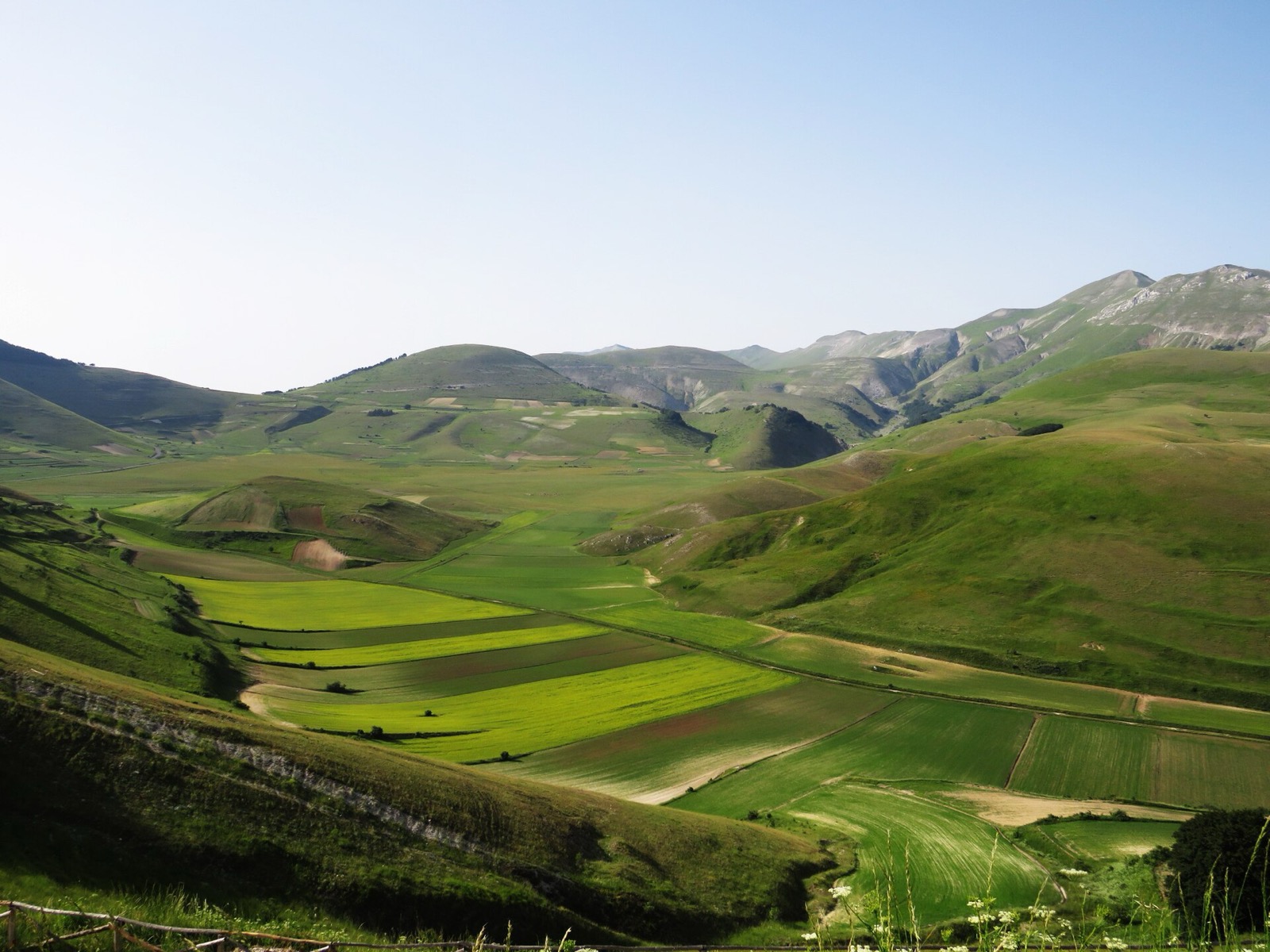
Il terzo dei Piani di Castelluccio, a nord del Pian Grande e oltre il confine, nelle Marche. Un pianoro carsico appartato che porta il nome di una guerra: quella che, nel 1522, Norcia perse.The third of the Castelluccio plateaux, north of the Pian Grande and across the border, in the Marche. A quiet karst basin that carries the name of a war: the one Norcia lost, in 1522.
Il Pian Perduto sta a quote d'alta montagna e i suoi confini sono incerti da secoli. Su questa pagina teniamo separato ciò che è documentato — la battaglia del 20 luglio 1522, la posizione nelle Marche — da ciò che è tradizione popolare, come il poema della battaglia. Le coordinate qui sotto sono un punto indicativo del pianoro, non un dato catastale; per sentieri, accessi e chiusure fa fede il Parco Nazionale dei Monti Sibillini. The Pian Perduto sits at high-mountain altitude and its boundaries have been disputed for centuries. On this page we keep apart what is documented — the battle of 20 July 1522, its location in the Marche — from what is popular tradition, such as the poem of the battle. The coordinates below mark an indicative point on the plain, not a cadastral figure; for trails, access and closures the authority is the Sibillini Mountains National Park.
I Piani di Castelluccio sono tre. Il Pian Grande è il grande palcoscenico della fioritura, quello delle fotografie; il Pian Piccolo gli sta accanto. Il terzo è il Pian Perduto, e sta subito a nord, oltre il tortuoso confine tra Umbria e Marche.The Castelluccio plateaux are three. The Pian Grande is the great stage of the bloom, the one in the photographs; the Pian Piccolo lies beside it. The third is the Pian Perduto, and it sits just to the north, across the winding border between Umbria and Marche.
È la differenza che sorprende chi arriva: il Pian Grande è umbro, comune di Norcia; il Pian Perduto è marchigiano, comune di Castelsantangelo sul Nera, in provincia di Macerata. Una conca carsica di circa 2,39 km², fondo pianeggiante a circa 1.300 metri, prati umidi e fenomeni di carsismo, interamente dentro il Parco Nazionale dei Monti Sibillini (Zona Speciale di Conservazione IT5330007).It is the difference that surprises new arrivals: the Pian Grande is Umbrian, in the comune of Norcia; the Pian Perduto is in the Marche, comune of Castelsantangelo sul Nera, province of Macerata. A karst basin of about 2.39 km², a flat floor at roughly 1,300 metres, damp meadows and karst features, entirely within the Sibillini Mountains National Park (Special Conservation Area IT5330007).
Più piccolo, più silenzioso e molto meno affollato del Pian Grande, è il piano che quasi nessuno cerca per nome — e proprio per questo, per chi lo cerca, vale il viaggio.Smaller, quieter and far less crowded than the Pian Grande, it is the plateau almost no one asks for by name — and for that very reason, to those who do, it is worth the trip.
≈ 42°50′N · 13°12′E · ~1.300 m
Le coordinate segnano un punto indicativo al centro del pianoro (fonte OpenStreetMap), non un dato ufficiale. Il Pian Perduto è una conca larga: usale come riferimento, non come destinazione GPS precisa.The coordinates mark an indicative point at the centre of the plain (source: OpenStreetMap), not an official figure. The Pian Perduto is a wide basin: use them as a bearing, not as a precise GPS destination.
Il nome non è poetico per caso: questo pianoro fu perduto. Per secoli i pascoli d'alta quota sul confine tra Umbria e Marche furono terra di liti tra Norcia e Visso, due comunità che si contendevano l'erba e il legname del pianoro di Castelluccio.The name is not poetic by chance: this plateau was lost. For centuries the high pastures on the Umbria-Marche border were a land of quarrels between Norcia and Visso, two communities contesting the grass and timber of the Castelluccio plateau.
La disputa esplose nella battaglia del 20 luglio 1522. È un fatto documentato dagli archivi: Norcia e Visso si affrontarono in armi per il possesso dei pascoli. Visso, alleata con Ussita e Castelsantangelo, ebbe la meglio; i norcini furono costretti ad abbandonare il campo, e il pianoro passò a Visso. Da allora, per Norcia, quel piano fu il piano perduto.The dispute erupted into the battle of 20 July 1522. It is a fact documented in the archives: Norcia and Visso clashed in arms over the pastures. Visso, allied with Ussita and Castelsantangelo, prevailed; the Norcini were forced to abandon the field, and the plateau passed to Visso. From then on, for Norcia, that plain was the lost plain.
È anche il motivo per cui, ancora oggi, il Pian Perduto è in Marche mentre il Pian Grande resta in Umbria: il confine che li divide è l'eredità geografica di quella sconfitta.It is also why, to this day, the Pian Perduto lies in the Marche while the Pian Grande stays in Umbria: the border dividing them is the geographic legacy of that defeat.
La data e l'esito della battaglia sono storici; il racconto dettagliato dello scontro, invece, ci arriva soprattutto attraverso il poema popolare — che è un'altra cosa. Ne parliamo qui sotto.The date and outcome of the battle are historical; the detailed account of the fight, however, reaches us mainly through the folk poem — which is another matter. We turn to it below.
Della battaglia i Sibillini hanno fatto un poema. La Battaglia del Pian Perduto è un poemetto in 116 ottave, tramandato per generazioni dai pastori-poeti che qui recitavano versi a memoria. Non è una cronaca: è epica popolare, e va letta per quello che è.Of the battle the Sibillini made a poem. La Battaglia del Pian Perduto is a short epic in 116 octaves, handed down for generations by the shepherd-poets who recited verse here by heart. It is not a chronicle: it is folk epic, and it should be read as such.
La tradizione ne attribuisce la prima parte — 94 ottave, semplici e ironiche — a un rozzo pastore di Vallinfante soprannominato Berrettaccia, agli inizi del Seicento; una seconda parte, più dotta, a un sacerdote di Castelsantangelo nel secolo dopo, che legò la vittoria di Visso alla fede dei suoi abitanti. La prima edizione a stampa è del 1914, a cura di Pietro Pirri.Tradition ascribes its first part — 94 octaves, plain and wry — to a rough shepherd from Vallinfante nicknamed Berrettaccia, in the early 1600s; a second, more learned part to a priest from Castelsantangelo a century later, who tied Visso's victory to the faith of its people. The first printed edition dates to 1914, edited by Pietro Pirri.
Il poema racconta come tutto sarebbe iniziato: un uomo di Visso, Giorro, sorpreso a tagliare legna sul pianoro da una guardia di Norcia, reagì con violenza ferendola, e scatenò la vendetta. Bello, vivo — ma leggenda. Il fatto storico resta la battaglia del 1522; il resto è racconto.The poem tells how it all supposedly began: a man from Visso, Giorro, caught cutting wood on the plateau by a Norcia forest guard, reacted violently and wounded him, unleashing the revenge. Vivid and fine — but legend. The historical fact remains the 1522 battle; the rest is story.
→ Piani di Castelluccio su Wikipedia→ Castelluccio plateaux on Wikipedia
→ Parco Nazionale dei Monti Sibillini→ Sibillini Mountains National Park
Il Pian Perduto si raggiunge dai Piani di Castelluccio, proseguendo verso nord oltre il Pian Grande, in direzione del confine marchigiano e di Castelsantangelo sul Nera. Non è una tappa "da parcheggio con vista": è un pianoro appartato, e il modo giusto per viverlo è a piedi, lungo i sentieri dell'altopiano.The Pian Perduto is reached from the Castelluccio plateaux, continuing north beyond the Pian Grande, toward the Marche border and Castelsantangelo sul Nera. It is not a "park-and-view" stop: it is a secluded plateau, and the right way to take it in is on foot, along the plateau trails.
Trattandosi di alta quota dentro un'area protetta, non pubblichiamo qui tracce, tempi o distanze precise che non possiamo garantire: sentieri, accessi e chiusure cambiano con la stagione e con lo stato del territorio (queste montagne portano ancora i segni del sisma del 2016). Per pianificare davvero, parti dai canali ufficiali del Parco e dei Comuni.Since this is high ground inside a protected area, we do not publish tracks, times or precise distances here that we cannot vouch for: trails, access and closures change with the season and the state of the land (these mountains still bear the marks of the 2016 earthquake). To plan properly, start from the official channels of the Park and the municipalities.
→ Accesso, navette e regole sui Piani→ Access, shuttles and rules on the plateaux
La fioritura di Castelluccio non conosce confini amministrativi. Tra fine maggio e luglio, quando il Pian Grande esplode di colori, anche il Pian Perduto si accende: papaveri, fiordalisi, senape selvatica e le altre specie che colorano i prati dei Sibillini.The Castelluccio bloom knows no administrative borders. Between late May and July, when the Pian Grande erupts in colour, the Pian Perduto lights up too: poppies, cornflowers, wild mustard and the other species that paint the Sibillini meadows.
La differenza è la folla: il Pian Grande, nei weekend di punta, è un fiume di persone; il Pian Perduto resta di norma più quieto. Chi cerca gli stessi colori con più silenzio, qui li trova — a patto di camminare un po' di più.The difference is the crowd: the Pian Grande, on peak weekends, is a river of people; the Pian Perduto usually stays quieter. Those after the same colours with more silence find them here — provided they walk a little further.
La fioritura non ha una data fissa: cambia ogni anno con la stagione. La finestra tipica va da fine maggio a inizio luglio, con il picco spesso tra giugno e i primi di luglio, ma è la natura a decidere.The bloom has no fixed date: it shifts every year with the season. The typical window runs from late May to early July, with the peak often between June and the start of July — but nature decides.
Il Pian Perduto è il terzo dei Piani di Castelluccio, insieme al più celebre Pian Grande e al Pian Piccolo. È una conca carsica di circa 2,39 km² a circa 1.300 metri di quota, con fondo pianeggiante e prati umidi. A differenza del Pian Grande, che è in Umbria nel comune di Norcia, il Pian Perduto si trova nelle Marche, nel comune di Castelsantangelo sul Nera (provincia di Macerata), all'interno del Parco Nazionale dei Monti Sibillini.The Pian Perduto is the third of the Castelluccio plateaux, alongside the better-known Pian Grande and the Pian Piccolo. It is a karst basin of about 2.39 km² at roughly 1,300 metres, with a flat floor and damp meadows. Unlike the Pian Grande, which is in Umbria in the comune of Norcia, the Pian Perduto lies in the Marche, in the comune of Castelsantangelo sul Nera (province of Macerata), inside the Sibillini Mountains National Park.
Il Pian Perduto sta subito a nord del Pian Grande, oltre il tortuoso confine tra Umbria e Marche. È più piccolo, più silenzioso e molto meno frequentato del Pian Grande: mentre il Pian Grande è il grande palcoscenico della fioritura, il Pian Perduto resta un pianoro appartato. È anche in una regione diversa: il Pian Grande è umbro (Norcia), il Pian Perduto è marchigiano (Castelsantangelo sul Nera, Macerata).The Pian Perduto sits just north of the Pian Grande, across the winding border between Umbria and Marche. It is smaller, quieter and far less visited than the Pian Grande: where the Pian Grande is the great stage of the bloom, the Pian Perduto stays a secluded plateau. It is also in a different region: the Pian Grande is Umbrian (Norcia), the Pian Perduto Marchigian (Castelsantangelo sul Nera, Macerata).
Il nome ricorda che questo pianoro fu "perduto" da Norcia. Per secoli i pascoli d'alta quota tra Umbria e Marche furono oggetto di dispute; la tradizione lega il nome alla Guerra del Pian Perduto, culminata nella battaglia del 20 luglio 1522 tra Norcia e Visso. Norcia perse, e con la sconfitta perse anche il possesso del pianoro, passato a Visso. Da qui il nome "Perduto".The name recalls that this plateau was "lost" by Norcia. For centuries the high pastures between Umbria and Marche were disputed; tradition ties the name to the War of Pian Perduto, which came to a head in the battle of 20 July 1522 between Norcia and Visso. Norcia lost, and with the defeat lost possession of the plateau, which passed to Visso. Hence the name "Lost".
È lo scontro tra Norcia e Visso per il possesso dei pascoli sul pianoro di Castelluccio, culminato nella battaglia del 20 luglio 1522, storicamente documentata dagli archivi. Visso, alleata con Ussita e Castelsantangelo, ebbe la meglio: i norcini furono costretti ad abbandonare il campo e il pianoro passò a Visso. La disputa affonda in secoli di liti confinarie tra le due comunità.It was the clash between Norcia and Visso over possession of the pastures on the Castelluccio plateau, coming to a head in the battle of 20 July 1522, historically documented in the archives. Visso, allied with Ussita and Castelsantangelo, prevailed: the Norcini were forced to abandon the field and the plateau passed to Visso. The dispute reaches back through centuries of border quarrels between the two communities.
No, è un poema popolare, non una cronaca. "La Battaglia del Pian Perduto" è un poemetto in 116 ottave tramandato dai pastori-poeti dei Sibillini: la parte più antica è attribuita a un pastore soprannominato Berrettaccia (primo Seicento), una seconda parte a un sacerdote di Castelsantangelo nel secolo successivo. La prima edizione a stampa è del 1914, a cura di Pietro Pirri. Racconta episodi come la lite del boscaiolo Giorro: fatti mescolati a leggenda, da leggere come tradizione orale e non come documento storico.No, it is a folk poem, not a chronicle. "La Battaglia del Pian Perduto" is a short epic in 116 octaves handed down by the shepherd-poets of the Sibillini: the oldest part is attributed to a shepherd nicknamed Berrettaccia (early 1600s), a second part to a priest from Castelsantangelo a century later. The first printed edition is from 1914, edited by Pietro Pirri. It tells episodes such as the woodcutter Giorro's quarrel: fact mixed with legend, to be read as oral tradition and not as a historical document.
Sì. Il Pian Perduto è area libera del Parco Nazionale dei Monti Sibillini e si raggiunge dai Piani di Castelluccio proseguendo verso nord. Anche qui, tra fine maggio e luglio, i prati si colorano della fioritura, di solito con meno gente rispetto al Pian Grande. Trattandosi di alta quota in un'area protetta, verifica sempre sentieri, accessi ed eventuali chiusure sui canali del Parco e dei Comuni prima di partire.Yes. The Pian Perduto is open land within the Sibillini Mountains National Park and is reached from the Castelluccio plateaux by continuing north. Here too, between late May and July, the meadows fill with the bloom, usually with fewer people than on the Pian Grande. As this is high ground in a protected area, always check trails, access and any closures on the Park and municipal channels before you set off.
Il Pian Perduto è il piano che Norcia perse — ma è anche il piano che pochi cercano, e che per questo ha conservato il suo silenzio. La guida completa al borgo, ai tre Piani, alla fioritura e all'accesso resta la home di castelluccio.org.The Pian Perduto is the plain Norcia lost — but it is also the plain few people seek, and which has kept its silence for that very reason. The complete guide to the village, the three plateaux, the bloom and access remains the castelluccio.org home page.